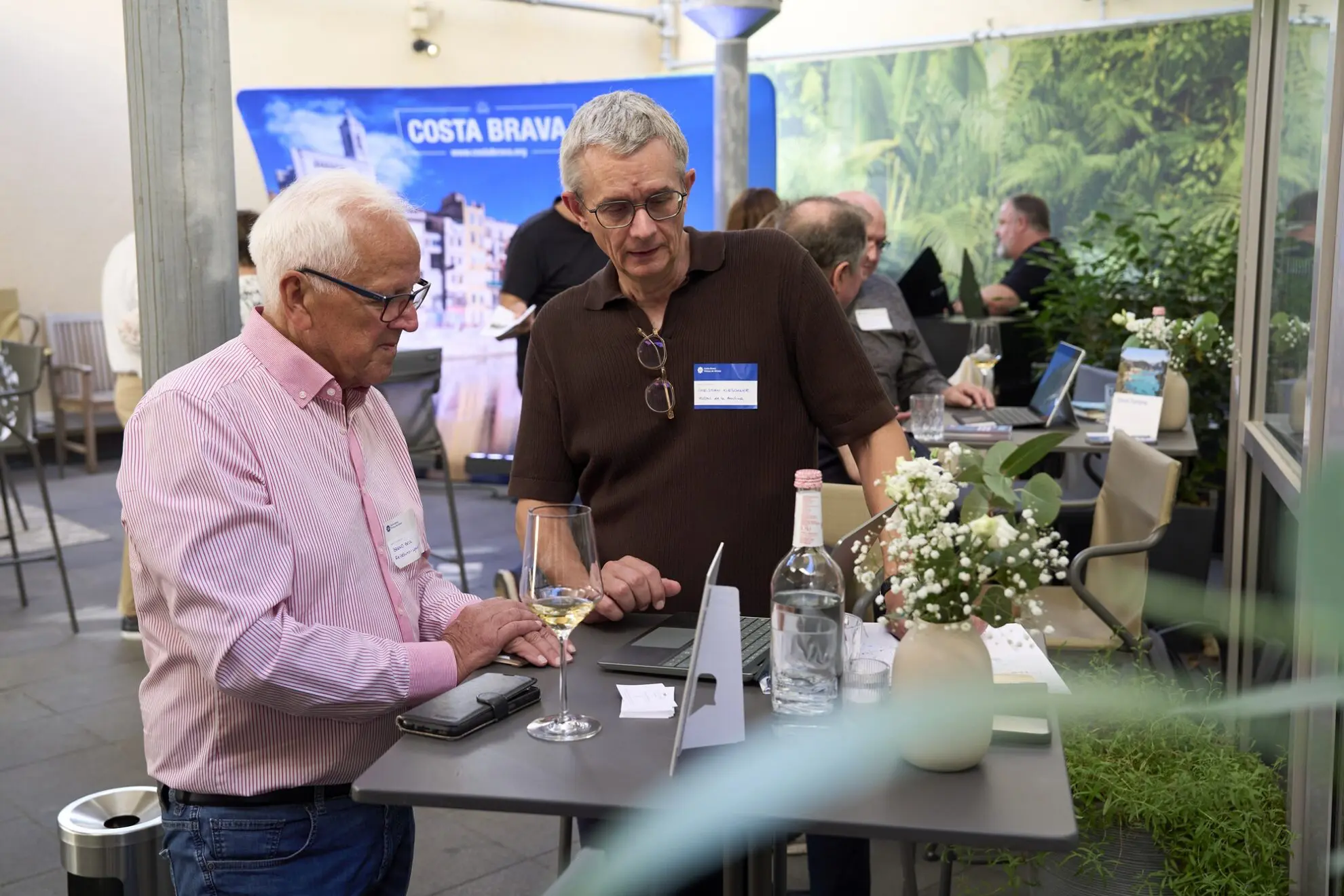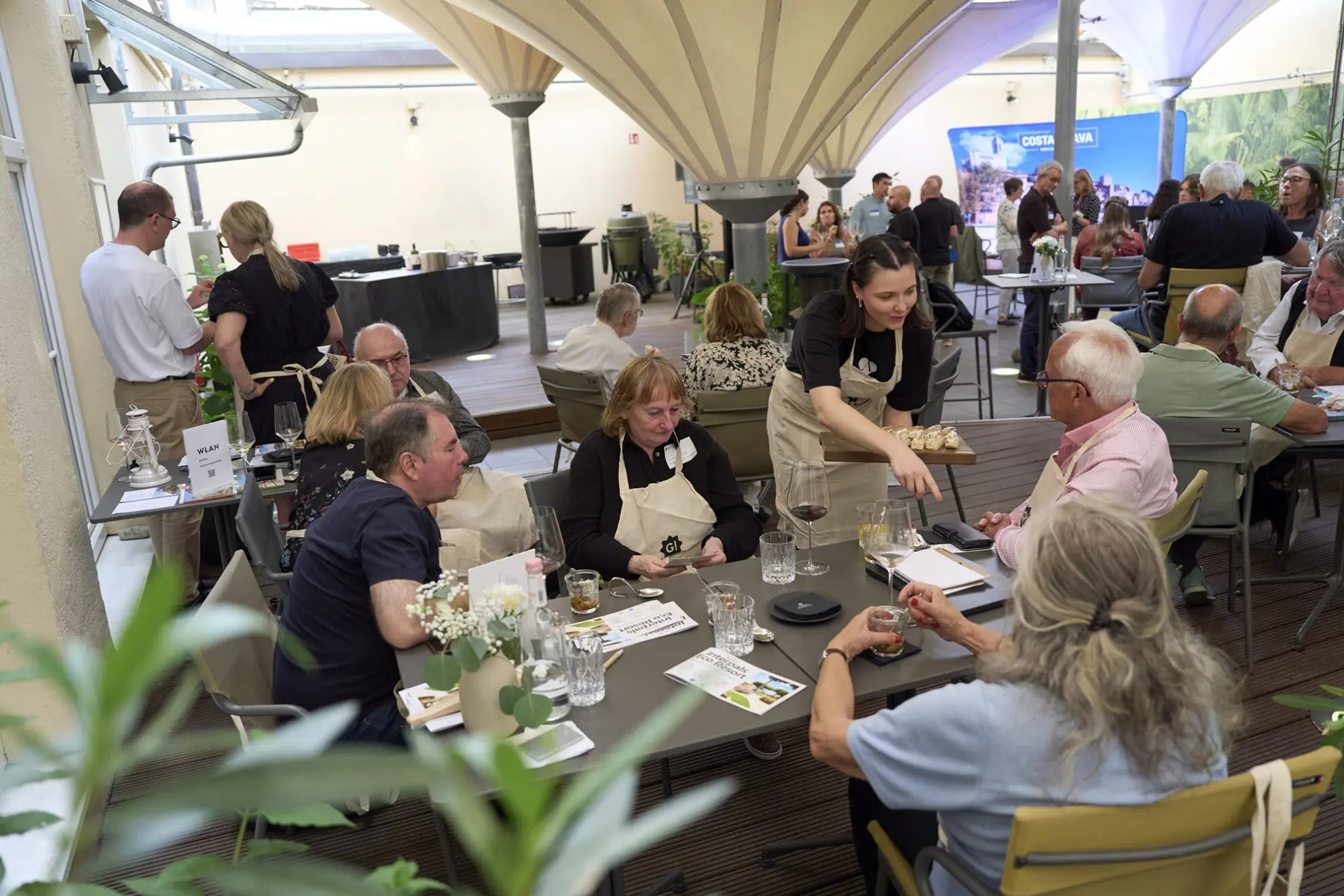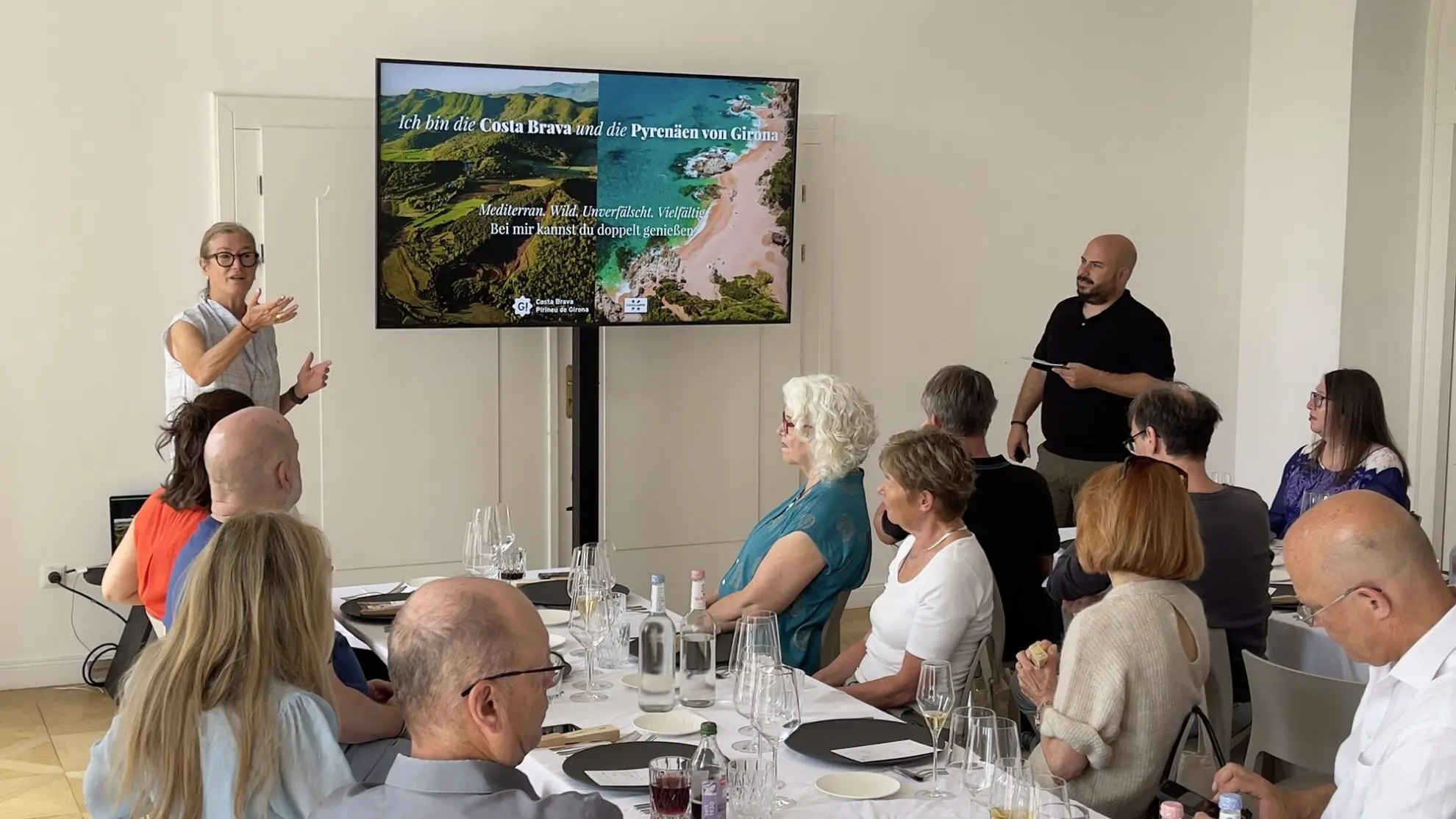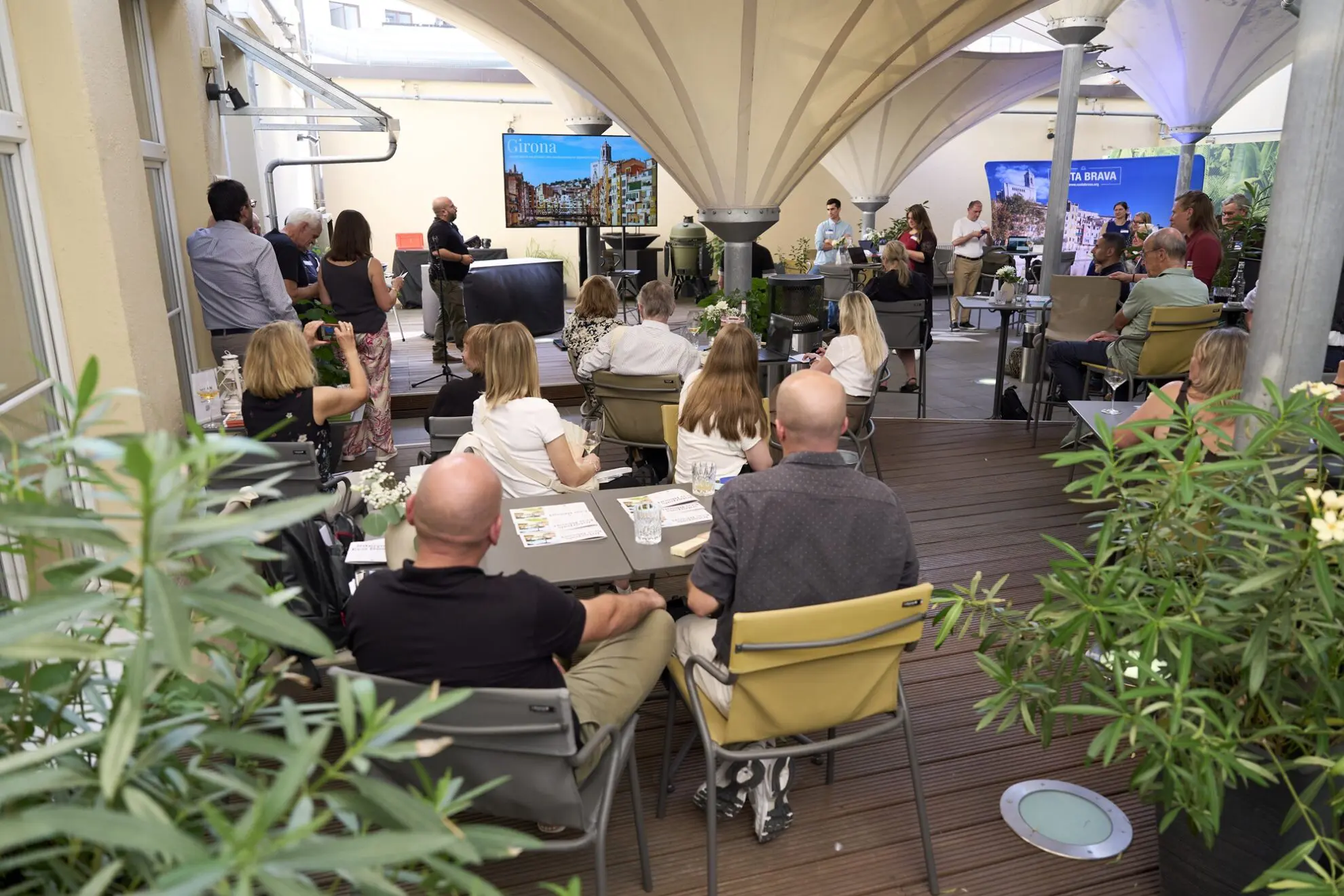
With the key objective of influencing this source market, on 17 June the Costa Brava Girona Tourist Board travelled to Munich. There he carried out a dual promotional and commercial initiative for Girona’s tourist offering, aimed at around fifty professionals from general travel agencies and the media.
The event was structured into two main phases:
• Midday (brand ambassadors): A presentation of the destination was held for journalists and digital content creators to introduce them to the new offerings for 2026. Among the attendees were media outlets such as Bavaria News, turi2 o LuxSpots.
• Evening (marketing and business): A workshop was held with thirteen representatives of Girona-based tourism organisations and companies and German travel agents from leading agencies such as Hauser Exkursionen, Mooser Reisen o 44 travel. The meeting was highly productive and generated more than seventy direct meetings.
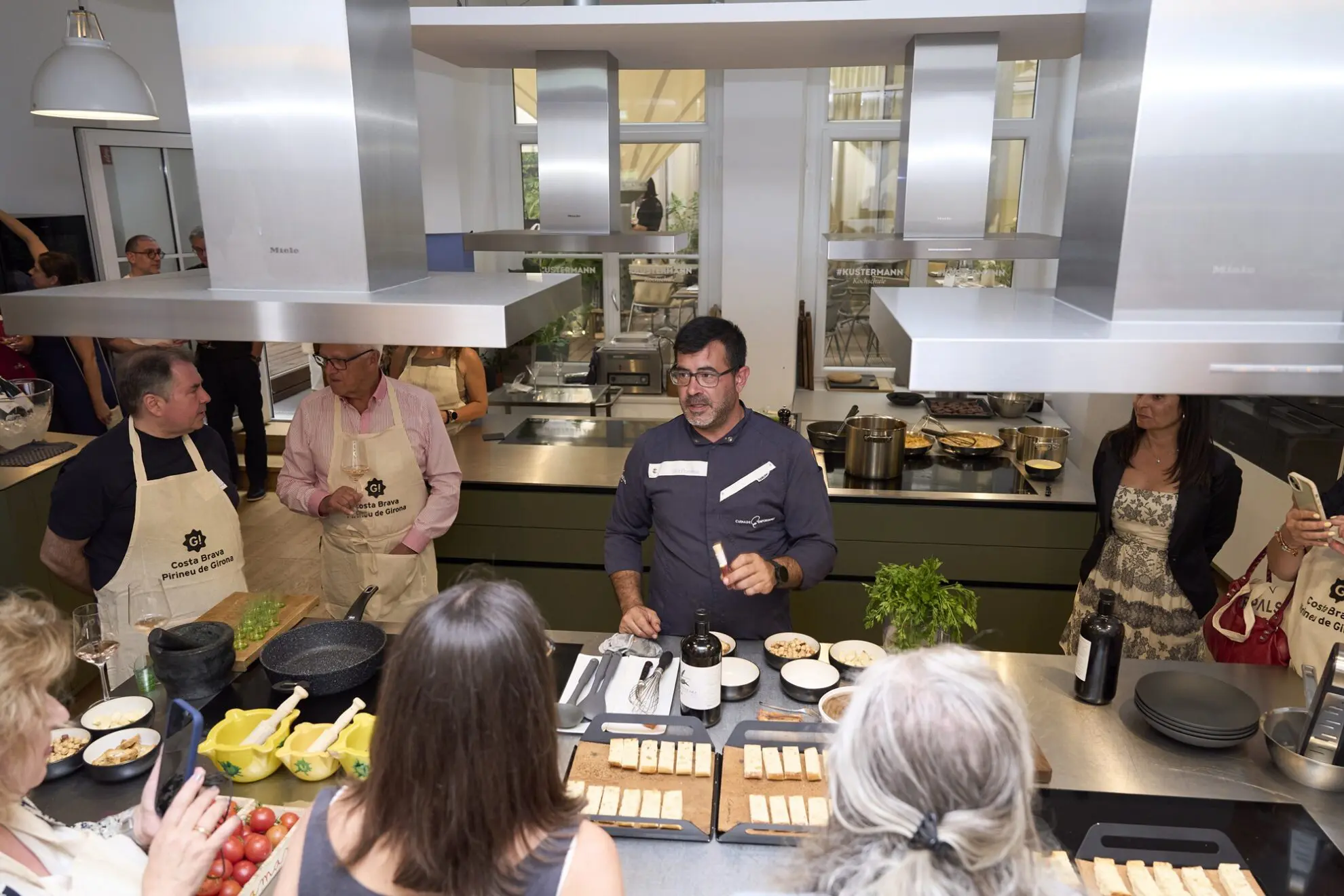
Gastronomy as a draw. As a unifying theme for the experience, each session was enlivened by a showcooking by the Cuina de l’Empordanet collective. (with the restaurants Casamar, Terramar and Aradi), whose dishes were paired with the wines of the DO Empordà Wine Route.
This promotional activity is part of the strategy set out in the Tourism Board’s 2026 Plan of Actions and Objectives (PAO), aimed at consolidating and reactivating the growth of one of our most loyal and valuable European markets.
The profile of the German tourist and the market trend
Currently, German tourism is the third-largest international source market for the Costa Brava and the Girona Pyrenees. According to data from Intellitur at the Catalan Tourist Board, the main reason for travel for this profile in Catalonia is leisure (82%), followed by business (11%). As far as mobility is concerned, the aeroplane is the predominant mode of transport (85%), followed by private cars (12%). Furthermore, seven out of every ten German tourists stay in hotels — ahead of holiday lets and camp-sites — and have an average stay of 6 nights, with an average spend of 172 euros per person per day.
Regarding the historical data from Eurecat (TDS platform), In 2025, the Girona province recorded the arrival of 436,478 Germans, who generated 1,919,818 overnight stays in regulated accommodation, a figure representing a slight 5% decrease compared to the previous year. However, in the first five months of 2026 the German market is already showing clear signs of recovery: it has regained market share and recorded 288,000 overnight stays, 3% more than in the same period last year.