In this first article, we speak to Sònia Joanals, CEO of Hotel Bell Repòs, an establishment in Platja d’Aro that shows how sustainability is not simply a set of environmental actions, but a way of understanding business and its relationship with the local area.
A responsibility that goes beyond the hotel
“A hotel cannot turn its back on the place it belongs to,” says Joanals. This idea sums up much of the philosophy that has guided the evolution of Hotel Bell Repòs in recent years. For its CEO, sustainable tourism is not a trend or a marketing label, but “a way of taking on business responsibility towards the local area, people and the resources of future generations”.
This outlook began with small everyday decisions and, over time, has become a cross-cutting strategic pillar. Today, sustainability forms part of the hotel’s governance and guides decisions ranging from product purchasing to investments in efficiency, accessibility and biodiversity. As Joanals puts it, “for us, sustainability is not a department or a communications campaign; it is the way we manage the company”.
That is why Bell Repòs increasingly talks about regenerative tourism, which Joanals defines as tourism “that does not merely seek to reduce impacts, but aspires to leave a place slightly better than it found it”.
Data that reflects a genuine commitment
When sustainability is part of everyday operations, it can also be measured. The hotel has installed a photovoltaic plant with 52 panels, which generates approximately 40% of the energy it consumes, while the remainder comes from renewable sources. It has also managed to reduce water consumption by 44% in four years, from 1.7 million litres to 800,000 litres per season.
These measures are complemented by the elimination of more than 24,000 single-use plastic bottles, the composting of organic matter and the development of circular economy projects with suppliers and local organisations. In its fight against food waste, the hotel also works with Too Good To Go, an initiative that has enabled it to save 556 packs and prevent 1.5 tonnes of food from being thrown away.
But this commitment is not limited to the environmental sphere: the hotel also works from a social perspective, with a focus on hiring senior talent, promoting equal opportunities, providing continuous training and improving tourism accessibility. Today, 73% of the workforce are women, and a significant proportion of the team is over the age of 40.
A garden transformed into a biodiversity refuge
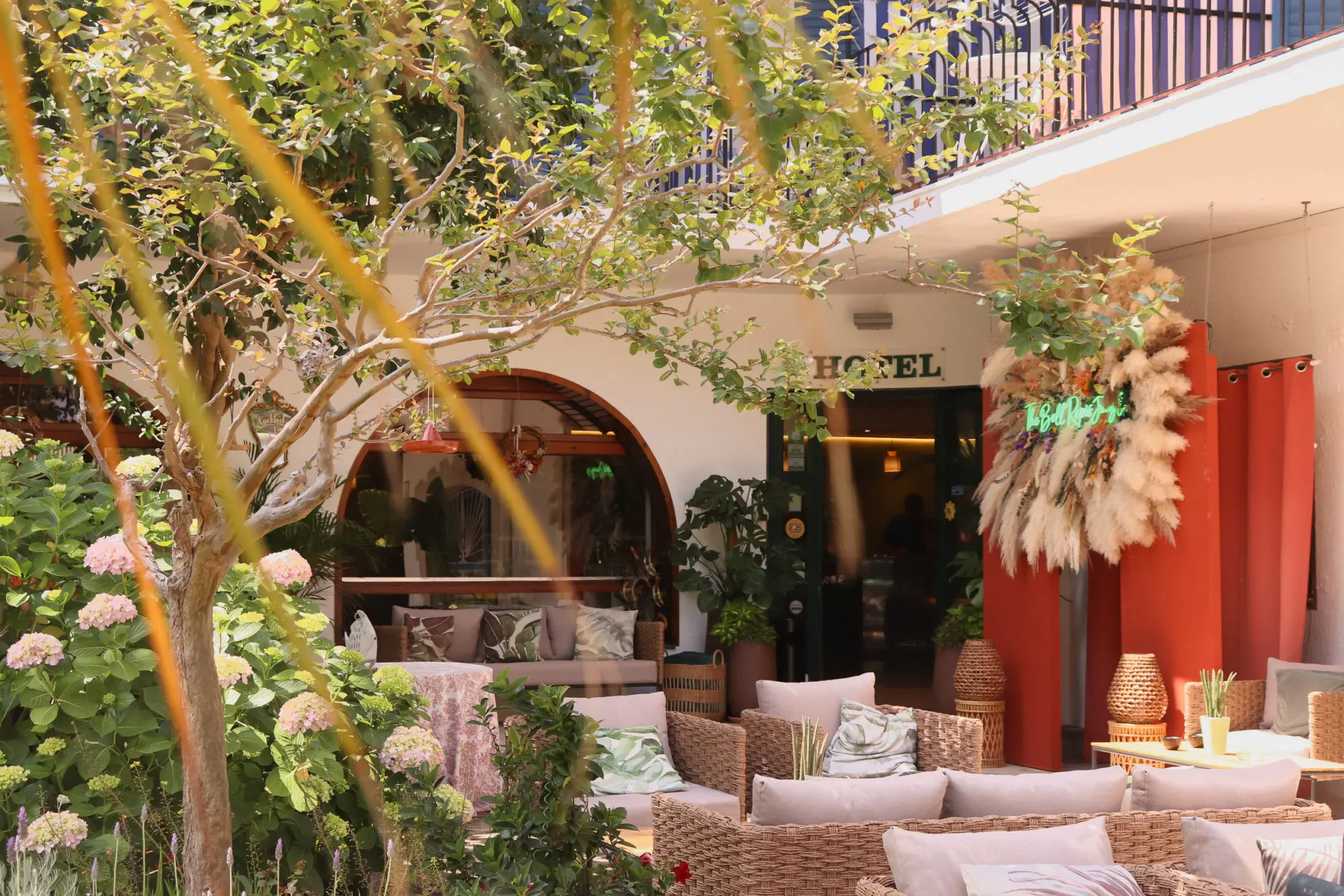
One of Hotel Bell Repòs’ most symbolic projects is the renaturalisation of its garden and the creation of the Butterfly Oasis, a space planted with native species that provides shelter for pollinating insects and birds.
Beyond its environmental value, this project clearly reflects the hotel’s philosophy: transforming an everyday space into an opportunity to reconnect with nature, foster learning and contribute to the active conservation of the local area.
Sustainability as a shared experience
For a sustainability strategy to work, it needs to involve everyone who forms part of the tourism experience. At Bell Repòs, many initiatives have emerged from suggestions made by the team itself. This internal engagement is also nurtured through proximity: making team members feel part of the project, listening to their contributions and organising an annual outing to get to know the destination better. With guests, Joanals explains, “the aim is not to impose, but to inspire: to explain what we do, why we do it and what impact each decision has”.
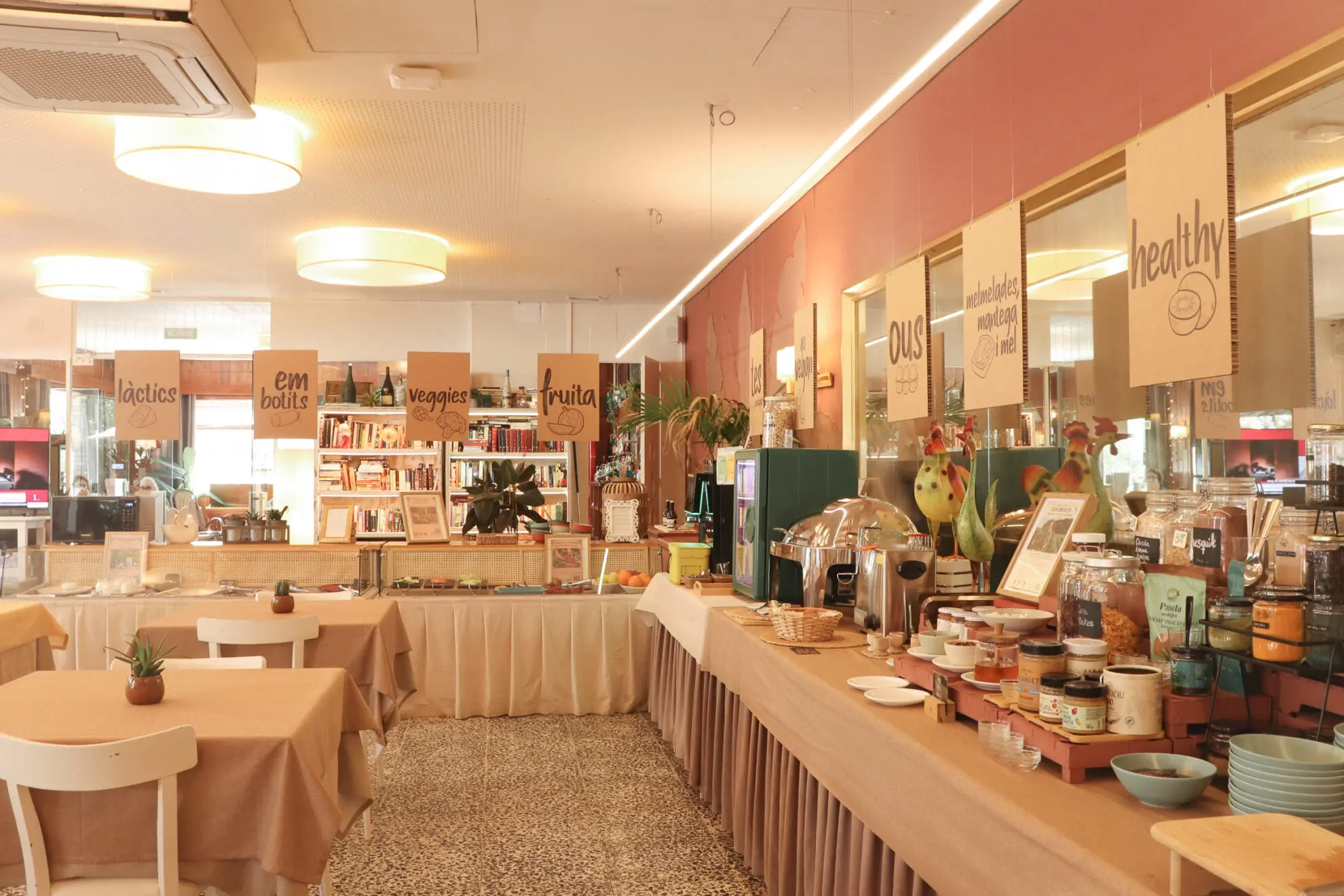
Signage, activities, cycle tourism routes, breakfast with local produce and the hotel’s garden spaces all turn a stay into an opportunity to discover a more conscious way of travelling.
The local community also plays a key role. Joanals explains that “the hotel works with local suppliers, collaborates with social and environmental associations and takes part in local projects”. This involvement is rooted in a clear conviction: “the success of a tourism business is directly linked to the economic, social and environmental health of the destination”.
A model that adds value to the local area
The path, however, is not always easy. Installing solar panels, adapting accessible spaces or transforming a conventional garden into a biodiversity refuge requires time, resources and a long-term vision. It also means questioning entrenched practices and changing internal habits. “The experience of Bell Repòs shows, nevertheless, that sustainability and profitability are not incompatible concepts, but can reinforce one another,” says Joanals.
Reducing water and energy consumption has made the company more resilient, while its environmental and social commitment has generated brand value, differentiation, a strong online reputation and a closer relationship with guests who share these values. It has also had a positive internal effect because, “when the team understands that it is part of a meaningful project, engagement and a sense of pride and belonging increase”. At the same time, initiatives such as Too Good To Go allow surplus food to be given a second life, with the proceeds allocated to social and environmental projects in the municipality and surrounding area.
For Joanals, “this challenge also requires spaces for collaboration, training and innovation”. In this respect, she highlights the role of the Costa Brava Girona Tourist Board in giving visibility to good practices, facilitating knowledge transfer between companies and promoting collective projects.
As the hotel’s CEO reminds us, “sustainability is not a competition between companies, but a shared responsibility”. The future of the Costa Brava and the Girona Pyrenees, she adds, “will depend on the ability to build alliances, share knowledge and move forward together towards a tourism model that benefits the local area, people and businesses”.
At Hotel Bell Repòs, this transformation has already begun. To discover more success stories like this one, subscribe to our professional newsletter.